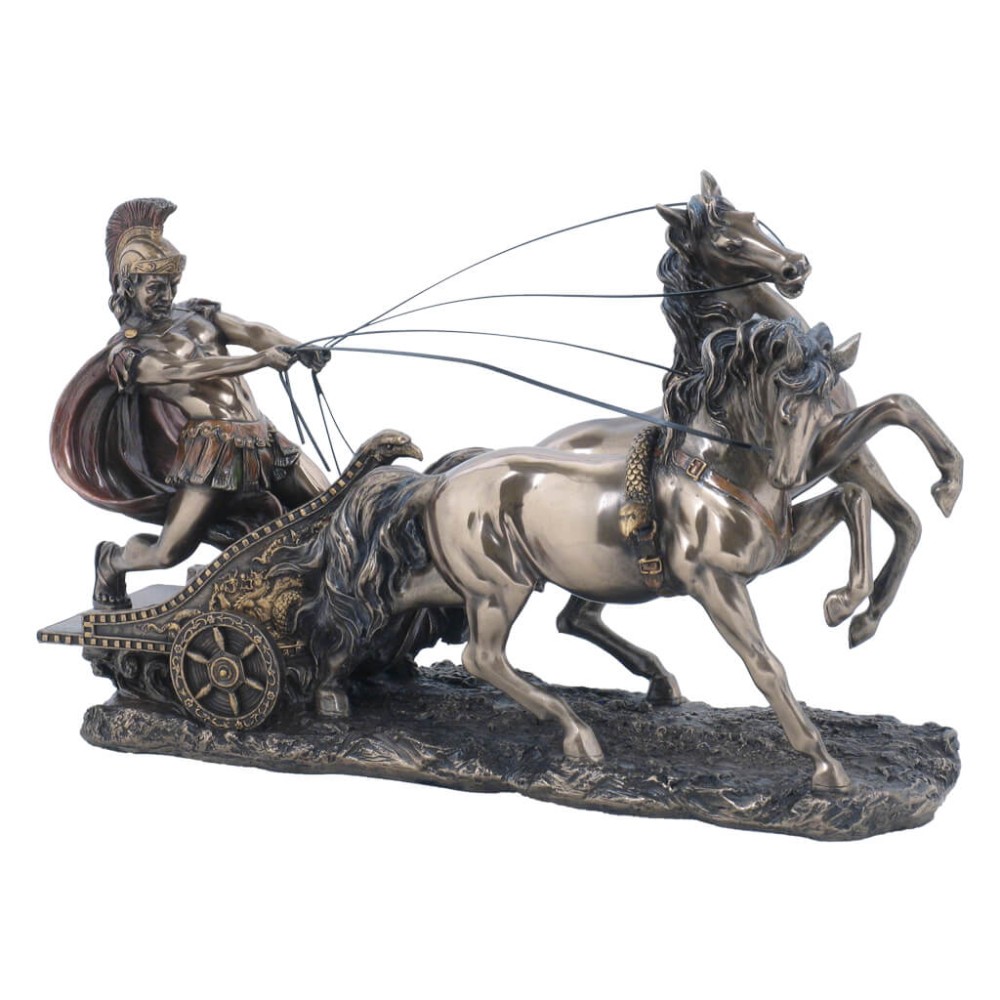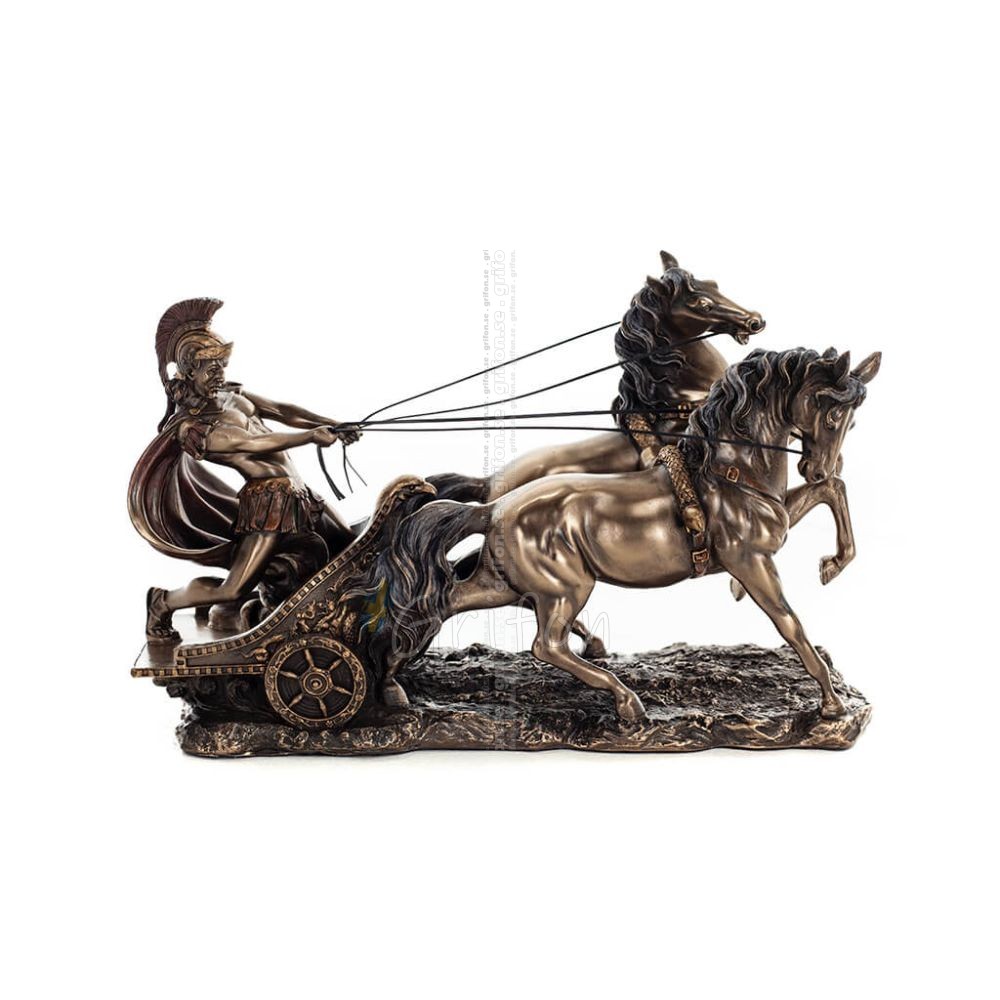
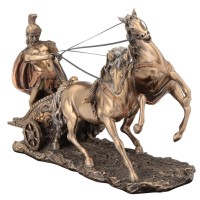
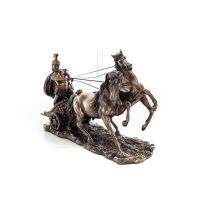
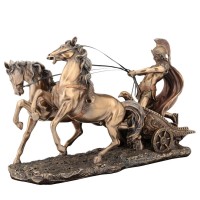
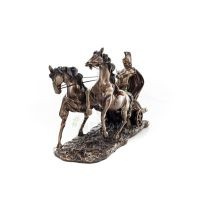
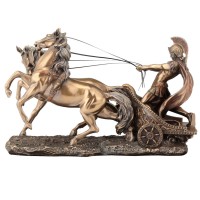
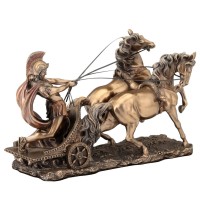
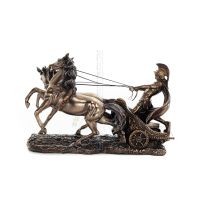
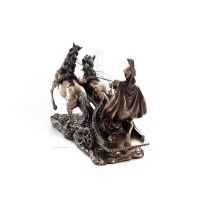
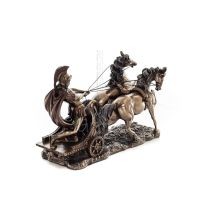

Achilles, a demigod of Greek mythology, is often depicted in a chariot, a symbol of power and speed. In one episode of the Iliad, he drags Hector’s body around the walls of Troy, an act that provokes both outrage and mourning, leaving unresolved questions of honor and hubris. In another scene, he refuses to fight due to Agamemnon’s insult, causing a reversal in the war’s outcome.
His return to battle, with his chariot crossing the field, is marked by divine interventions and ambiguity regarding the justice of vengeance. His figure remains divided between human rage and divine fate, with the conflict never fully resolved.
Achilles, a demigod of Greek mythology, is often depicted in a chariot, a symbol of power and speed. In one episode of the Iliad, he drags Hector’s body around the walls of Troy, an act that provokes both outrage and mourning, leaving unresolved questions of honor and hubris. In another scene, he refuses to fight due to Agamemnon’s insult, causing a reversal in the war’s outcome.
His return to battle, with his chariot crossing the field, is marked by divine interventions and ambiguity regarding the justice of vengeance. His figure remains divided between human rage and divine fate, with the conflict never fully resolved.
Wholesale price — shown after approval. Create an account & apply to become a wholesale customer.
Achilles, demigod son of Thetis and Peleus, dominates the Iliad as the most powerful Achaean warrior. His depiction in a chariot, a symbol of speed and relentless force, is linked to scenes of extreme violence and moral ambiguity. The most famous and darkest moment is the dragging of Hector’s corpse around the walls of Troy. This act, revenge for Patroclus’ death, provokes the wrath of the gods and the grief of the Trojans, leaving open questions of justice and hubris.
In lesser-known traditions, Achilles confronts the Amazon Penthesilea, whom he kills from his chariot, only to feel immediate desire and sorrow for her death. This episode, full of contradictions, highlights the tension between violence and longing, without offering resolution.
Achilles’ refusal to fight due to Agamemnon’s insult leads to disastrous consequences for the Achaeans. His return to battle, his chariot crossing the field, is marked by divine interventions—Hera and Apollo alternately aiding or hindering him—intensifying uncertainty about the justice of vengeance.
In modern times, Achilles remains a symbol of the ambiguity between human rage and divine fate. The image of the chariot, sometimes a tool of glory and sometimes of hubris, preserves the tension between honor and destruction.
The chariot as a symbol appears in many cultures. In ancient India, Krishna’s chariot in the Mahabharata becomes a vehicle for divine teaching and battlefield, where violence and spirituality coexist. In China, the chariots of Zhou dynasty kings are associated with order and hierarchy, but also with bloody struggles for power. In Egypt, the pharaoh’s chariot is a symbol of divine authority and a means of destroying enemies, its dual nature remaining open to interpretation.
The polysemy of the chariot and the ambiguity of Achilles remain vivid, inviting modern reflection on the limits of violence, honor, and fate.
Data sheet
Specific References
No customer reviews for the moment.